
Depending on where you live, staying warm can be a challenge. And the sources of heat are many. Growing up, I recall a whole catalog of ways we kept warm, and most of them weren’t the kind you controlled with a remote.
My earliest memories of heat don’t come from a thermostat. They come from a wall.
Specifically, a wall heater in the sole bathroom of our house on Beech Street in Ashdown, Arkansas.
That heater was white, looked porcelain, and had a chrome knob near the bottom. It didn’t have a digital display. It didn’t have a “smart” setting. It didn’t have a schedule. It had one knob, and that knob required significant hand strength.
The knob turned on the gas. Then you needed the other hand to strike a match. My mom could turn on the gas, light the match, and discipline my sister and me all at the same time.
I’ve brought up the white ceramic bathroom heater around other folks from that era, and it seems to be a common thread. If they didn’t have one in their home, their grandmother did. If their grandmother didn’t, their aunt did. And if none of those relatives had one, they at least remember being warned about one.
“Don’t ever touch this,” mom warned.
We got the same warning about anyone who had stand-alone Dearborn Heaters. The ones where the grates got so hot, they turned orange.
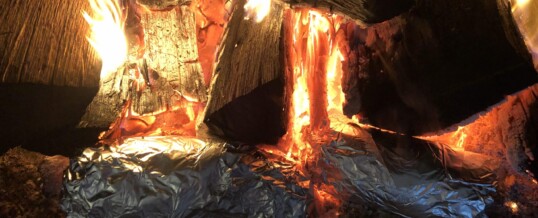
For much of the rest of the house, the fireplace was a big source of heat. Today, many people have fake logs and natural gas in their fireplace, but decades ago, wood burning was common.
At my house, it still is.
My wife and I installed a wood stove in our current home soon after we moved in. We grew up around it. There is something familiar about it. Something honest.
The dad acquired the wood, and the sons split and stacked it. Everyone did their part. It wasn’t optional.
In the homes of my grandparents’ generation, wood provided the fuel for cooking and heating. For cooking, you had to know how much oak, how much heat, and how much time with a wood stove. It wasn’t guesswork. You didn’t learn it from a book. You learned it because your warmth and supper depended on it.
Between the 1920s and 1950s, a cheaper and easier option in Southern homes became common: the floor furnace.
A floor furnace wasn’t vented. The heat simply emanated from the floor. The good part about floor furnaces was how much money you saved. The bad part? ER bills for treatment of falling toddlers who branded their palms and elbows.
Floor furnaces created a whole generation of Southern children who grew up with the reflexes of a cat.
You learned to step around them without thinking. You learned not to drop your crayons. You learned not to chase the dog through the hallway in socks. And if you were really unlucky, you learned the hard way that a floor furnace doesn’t care about your feelings.
Our house on Beech had two floor furnaces, one in the hallway and another in the kitchen by the window. I can still picture the way you’d stand over them when you came in from outside, letting that heat climb up your jeans like it was alive.
Each winter, Dad would have to clean the chimney and have the gas company come out to service and check the floor furnaces.
My job was to keep the fireplace fed with wood. It still is.
Today, we have wood stoves in our home and our shop. And if you’ve ever been in a shop in the winter, you know there’s a special kind of cold that settles in there. A shop cold gets into your bones and acts like it signed a lease.
A wood stove turns that cold into something manageable.
I know that today there are many easier options for staying warm. Mini-splits are a viable option for older and newer homes. A mini-split is a system that can cool your house in summer and heat it in winter, without using big air ducts like a central HVAC system. They’re efficient, clean, and quiet.
You can mount them on the wall, set the temperature, and go about your life.
My mom’s new home has mini-splits. It’s very convenient to take a remote control and turn on and off the heat and air. Even easier to adjust the temp that way.
No match. No knob. No ash. No wood. Just a button.
But there’s still something about being part of the process that keeps you warm. Handling the wood is hard work now that leads to comfort later. It’s a similar feeling to growing and harvesting your own food. It’s not just about the heat. It’s about what you did to earn it.
And as long as I can, I’ll keep the options open. Stay flexible.
Fireplaces, floor furnaces, and bathroom heaters.
You never know when someone might need help lighting an old bathroom heater.
© 2026 John Moore
John’s, “Puns for Groan People” and two volumes about growing up in the South called, “Write of Passage,” are available at TheCountryWriter.com. John would like to hear from you at John@TheCountryWriter.com.
FEB
2026