
Luby’s. Bryce’s. Wyatt’s. Piccadilly.
All cafeterias. All gone.
But if you grew up in the South in the 50s, 60s, or 70s, odds are you had a favorite tray of food at your favorite cafeteria.
For those of us in Ashdown, Arkansas, it was Luby’s in Texarkana. First, we went to the Oaklawn Village location. Later, it was at Central Mall.
The menu options were the same either place; at any of their sites, for that matter. So, you could get your favorite entree, vegetables, bread, and dessert, wherever you stopped.
And that was one of the beautiful things about a cafeteria. Anyone could get just about anything they wanted. And we did.
Truth be told, Southerners have the Yanks to thank for the existence of cafeterias.
According to Business Insider, the first recorded cafeteria opened across the street from the New York Stock Exchange in 1885. Brokers would pick out their food and then pay based on an honor system.
The idea of feeding lots of people quickly spread as businesses began to grow in towns across the country. But cafeterias became especially popular in the South. Even essential.
As one man opened a jewelry store, another a bank, and another hardware; finding ways to help each other’s businesses become more profitable required meetings. Lunch became the perfect time to do that.
Rotary Clubs, Chambers of Commerce, and other civic organizations needed a place to gather, so most cafeterias added meeting rooms. Or at least an area where tables could be pushed together and accordion doors could offer some privacy.
Going through the line at the beginning of the gathering allowed the attendees to get exactly what they wanted to eat.
The same was the case for families who wanted a place to dine, especially on Sundays after church.
My family normally went to Luby’s and then a movie after church. Dad would drive us to the Oaklawn location in mom’s Buick and we’d line up.
The Luby’s in Oaklawn was unique in that it was next to Belk Jones, which was a clothing store. As you made your way though the line, there were shopping windows built into the wall, with arrangements of the latest fashions and accessories available next door.
You could see right into the store, but you were still inside the restaurant. It gave people something to do as we waited. Often, waiting for a good while before picking up our trays and silverware, which was neatly wrapped inside a real cloth napkin.
You’d place your tray on the tray rail (three round, stainless steel rods) and slide it down the line as you chose the items you wanted, and the cafeteria employee picked up and handed them to you.
My mother almost always got fish almandine, green beans, broccoli casserole, a yeast roll, and pecan pie.
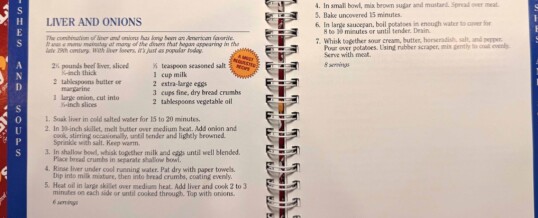
Dad picked liver and onions, double fried potatoes, collard greens, cornbread, and chocolate pie.
My sister had to be forced to pick anything. I’m fairly certain that she didn’t eat much of anything from birth to puberty, except for sliced tomatoes and candy.
I liked hamburger steak with gravy, mac and cheese, fried okra, jalapeño cornbread, and pecan pie.
Everyone had their favorites. And at a cafeteria you could get just about anything you wanted.
Until you couldn’t.
One of the last reports for corporate earnings showed that a Luby’s could serve up to 6,500 customers per week. But that changed. And it’s our fault.
As food became more expensive, most of us began looking to fast food restaurants as less expensive options. Even though the food quality was far worse than a cafeteria, the dollar dictated our choices.
It still does.
For the remainder of the cafeterias, it’s getting harder to compete with a .99-cent heart attack in a sack. A family can easily drop a C-note at a cafeteria.
Consequently, making it as a cafeteria has gotten harder.
Even after the Luby’s at Oaklawn Village gave way to the Luby’s at the mall, few people now go to the mall.
Before the last Luby’s closed where I now live, I had, with a nod to my dad, switched my selection from hamburger steak to liver and onions. The rest of my tray looked the same, right up until the last day Luby’s was open.
In the 1990s, Luby’s sold a cookbook with all of their popular recipes. I have it, but my attempts at liver and onions have never measured up.
But what does measure up are the memories that cafeterias made as we grew up, lived our lives, and enjoyed the time we had with our favorites on our trays.
© 2026 John Moore
John’s, “Puns for Groan People” and two volumes about growing up in the South called, “Write of Passage,” are available at TheCountryWriter.com. John would like to hear from you at John@TheCountryWriter.com.
APR
2026