
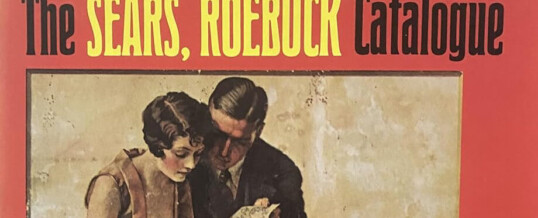
For much of the twentieth century, the Sears Roebuck catalog held a special place in American homes. It was never just a book of merchandise. It was a window into a wider world for families who lived in small towns and rural places where stores carried little beyond the basics.
In Ashdown, Arkansas, the catalog shaped Christmas wishes, household plans, and childhood arguments over who got to see it first when it arrived.
Sears was not the only catalog. Montgomery Ward, JC Penney, and Spiegel all influenced the women of the household. They made most of the buying decisions, especially when it came to children’s clothing, Christmas gifts, and household appliances.
Families spent hours with their head in catalogs. Page corners were folded, marked, and a clear trail of hints left for mom to notice.
According to the Chicago History Museum, Montgomery Ward published the first general mail order catalog in 1872. It was a single sheet offering 163 items. Sears followed in 1888. Ward’s publication opened a new world of purchasing for everyday people. Suddenly, customers could order dry goods, farm supplies, and hardware without special business connections.
History’s website notes that in 1886, Richard Sears stumbled onto a shipment of unsold watches. He sold them so quickly that he formed a watch company, later partnering with Alvah Roebuck.
Sears eventually sold everything. They even sold houses. Buyers could order a kit home, have it delivered to town, and build it piece by piece. Many Sears homes still stand today, including a few neighborhoods made entirely of them.
When I think about my childhood home, almost everything in it probably came from Sears. Clothes, appliances, the television, stereo, pool table, ping-pong table, board games, furniture, tools, and automotive items like DieHard batteries.
JC Penney and Spiegel also played a part. My mom bought clothing from them, and occasionally she ordered electronics from Penney’s.
My grandparents grew up when money was tight. Purchases during The Depression were rarely impulsive. They would sit at the kitchen table, turn the big pages, and talk about things they wished they could buy. The catalog allowed them to dream a little, even when buying was not possible.
Once a newer catalog arrived, the older one went to its final home. The outhouse needed reading material and eventually something else. Families across the South knew this routine. Long before recycling, the Sears catalog served a final practical purpose. No one thought twice about it. The catalog was part of everyday life from front cover to back page.
By the time I was growing up, the arrival of the new Sears catalog was an event for all of us. Our mail lady knew we watched for it. My earliest memories of the catalog are from the 1960s. My sister and I would race each other to the door. She wanted the toy section so she could study the dolls. Chatty Kathy was her favorite, and she talked about that doll for weeks.
I went straight to the Hot Wheels. Those bright cars and looping tracks filled my imagination. We sat on the living room floor, arguing over who got the best pages. Even when we pretended to be annoyed, we usually ended up sitting shoulder to shoulder, just dreaming.
Christmas made the catalog feel even more important. Shopping in the South was limited. Many towns had only a few stores. The Sears catalog filled the gaps. It became the bridge between what children hoped for and what parents could find. Kids studied it like a textbook. They made lists, circled items, and placed their trust in Santa, believing that Christmas morning might deliver at least one of the treasures they picked out.
Today everything is online. If someone wants a doll or a special set of Hot Wheels, they can order it from a phone and have it delivered overnight. Convenience has become the standard of modern life. There is value in that convenience, but something important has faded.
The Sears catalog encouraged imagination. It slowed life down. It created space for wishing, hoping, planning, and dreaming. It taught children how to wait for something worth having. It taught them that patience often made the reward feel richer.
Sears and its catalog both eventually faded as the digital world took over, yet its influence remains. Wishing, circling, and waiting shaped generations. The Sears catalog offered a shared experience, something online shopping can never truly replace.
© 2025 John Moore
John’s book titles include Puns for Groan People and two volumes about growing up in the South titled Write of Passage. They are available on Amazon. Contact him at John@TheCountryWriter.com.
DEC
2025