
Scouting was once as common for kids as Cap’n Crunch and Post Toasties. Learning how to tie knots, set up a tent and campsite, and earning merit badges, consumed much of a Southern boy’s or girl’s time.
Often, your mom and dad were the den mother and trip advisor. Which meant you not only had to learn everything put in front of you, you always had to be on your best behavior.
Much like it was summarily announced to me that at the ripe old age of six I’d be playing little league baseball, it was also announced that I was about to become a Cub Scout.
All I knew about scouting was that Beaver Cleaver was a Cub Scout and that gave him license to wear a cool uniform and cap.
We had weekly meetings at the Ashdown, Arkansas, city library, which at that time was located on the second floor of an old building downtown. The first floor, which was halfway buried underground, housed the water and police departments.
We learned this by hanging from the second floor balcony and staring through the windows. The signs for each department clearly marked who sat where, even though it appeared to be a shared space.
My mom and Ricky Walraven’s mom were the den mothers. They used a scouting manual to guide us through the first step, second step, and so on, to become bona fide Cub Scouts. The first step was to learn the promise:
“I, John, promise to do my best
To do my duty to God and my country,
To be square, and
To obey the Law of the Pack.”
We always started each meeting with the promise.
Strands of rope were brought in by the boys who lived on farms and we used them to learn to tie knots.
The square knot joined two ropes of about the same size. The bowline made a loop that stayed loose. Two half hitches were what we used to secure a rope to a post or tree. There were many other knots we learned, and most were used when we went camping.
This is where the dads came into the picture. The men would load us all up in their vehicles and haul us to the woods. My dad drove a 1952 Chevrolet 5-window pickup. The men rode in the front and we rode in the back with our tents and gear.
No one thought anything of a load of unsecured Cub Scouts going down the road at 60 miles per hour back then. And it was awesome.
We earned our badges by gathering firewood, building a campfire, identifying plants, fishing for our dinner, setting up our tent and bedding, and listening to the men tell scary stories right before we went to bed.
We didn’t actually get a badge for listening to scary stories. We did learn about the monster that lived somewhere near our camping area, and the ghost of the boy the monster had run off with because he wasn’t prepared properly and hadn’t earned all of his merit badges.
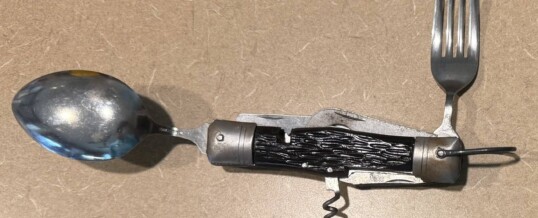
We made toast on a stick. Learned to use a compass. How to sharpen our Cub Scout knife. And why putting others ahead of ourselves was always the right choice.
When we weren’t camping, the den mothers and dads took us on field trips to learn history. The history of those who settled the area where we now lived.
One of my favorite field trips was going to Old Washington, Arkansas.
It’s called, Historic Washington State Park, near Hope in southwest Arkansas.
Washington was founded in 1824 and became an important stop on the Southwest Trail to Texas. During the Civil War, it served as the Confederate state capital of Arkansas from 1863 to 1865 after Union forces captured Little Rock.
It’s particularly known for its blacksmithing history. According to local tradition, Washington blacksmith James Black made an early version of the famous Bowie knife for James Bowie, who later died at the Alamo.
I made it to Webelos and Boy Scouts, but didn’t make Eagle Scout, which is the pinnacle of Scouting for boys. Our oldest son did, though. And what he learned in Scouting shines through today.
He is self-reliant, creative in a pinch, and is always helping someone else.
I’m unsure why participation in Scouting isn’t at the level that it used to be, but what Scouting taught and still teaches is worth involving our young people.
Because promising to do our best, to do our duty, to God and our country, to be square, and to obey the law of the pack, isn’t a bad thing. Not a bad thing at all.
© 2026 John Moore
John’s new book,“Write of Passage: Vol. 3,” and his other writings are available on Amazon. Write him at John@TheCountryWriter.com.
SEP
2026