
Broadcasting on Sundays was once a sea of sermons. If you turned on your radio or television, you’d hear or see a minister delivering his weekly message. From sunup (when stations signed on) until at least noon, it was solid preaching.
Today, depending on where you live, it’s still a lot like that. But the once unthinkable programming decision to air something other than a church program, eventually crept into our Sabbaths.
Unless you grew up during the mid-20th Century, it’s hard to understand how many different church programs there were. We only had three television channels (ABC, CBS, and NBC affiliates), but there were lots of different radio stations. And for every broadcasting outlet, there were sometimes dozens of preachers.
Most were local ministers, but some had regional followings. A select few had national ministries. When I got into the radio business in the late 1970s, I learned about all of them.
Today, almost every radio or television station is on-the-air 24/7. That’s a fairly recent thing. When I got started, we signed on KMLA, the radio station in Ashdown, Arkansas, at 5:30 a.m. and signed off at midnight. I suspect the reason this was done was money. If you turned off the station for six hours, that was one guy you didn’t have to pay.
Maybe there were other reasons, but that always seemed to be the most logical.
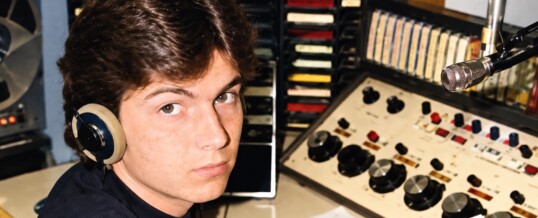
If you were the new guy on the air staff, you almost always began your career working Sunday morning sign-on. This meant that you had to have the radio station on the air by 5:30 a.m. so that you could begin airing all of the church-sponsored programs.
While the rest of the fellas were sleeping off a Saturday night hangover, you and Mr. Coffee were at the station cueing up and playing the different church shows. They ranged from God’s News Behind The News (a syndicated message that interspersed the latest news with scriptural interpretation) to Powerline with Brother John Rivers. Powerline was a music countdown show that included current pop songs that could be played in mixed company. Most of the tunes were generic and soft rock ballads.
The most unique thing about working Sunday morning sign-on was that many of the local preachers did their shows live. Meaning, they actually came to the radio station in their suit and tie and sat behind a microphone and preached for their 15 minutes or half-hour.
Since ministers are used to having a congregation to preach to, a radio station presented somewhat of a unique situation. Their congregation was still getting ready for church. So, the only person they had to preach to was me.
Now, I was not in a suit and tie, and wasn’t exactly what you’d call presentable on Sunday morning. I usually rolled out of bed at 5:10 a.m., shoved a stick of Juicy Fruit in my mouth, put a ball cap on my head, and pulled on a pair of pants and T-shirt to go to work.
In other words, I represented a pretty good sinner. It was Sunday, I wasn’t at church, and I was underdressed. So, the ministers who came to preach live (including my pastor) always stared right at me when they preached.
The radio station control room sat at the front of the building, but between the front door and the control room was the newsroom. And the newsroom was where the pastors sat in front of a microphone to deliver their sermons.
It went something like this:
Me: “We now join Brother Jackie Adams from Bethel Missionary Baptist Church in Ashdown, Arkansas, for today’s sermon. And now, Brother Adams.”
Brother Adams: “If you’re not in church today, let me encourage you to turn away from being backslidden and come visit with us.”
He looked right at me every time he said it. I don’t think it helped that I had a Marlboro Red dangling from the corner of my mouth and the smoke was wisping through my eyebrows and long hair.
There were at least five ministers who did their shows live, and each must’ve listened to the previous preacher, because they almost always seemed to include a rebuttal or retort for what the guy before them had to say.
Not a surprise when you had Church of Christ, Pentecostal, Baptist, Methodist, and other assorted faiths.
But it kept me on my toes, and they got out their side of things.
Where I live now, Sunday still includes radio and TV preachers, but not nearly as many as it did years ago. This week, tune in the radio and TV preachers. They’re fading from the dial.
If you really want to feel like they’re talking to you, throw on a T-shirt and ball cap. But leave out the Marlboro Reds. They’re bad for you.
© 2026 John Moore
John’s new book, Write of Passage: Volume 3, is available on Amazon. Write to John at TheCountryWriter.com.
OCT
2026