
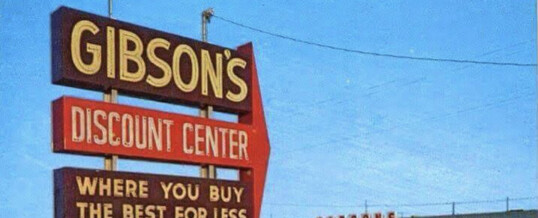
There was a time when you could drive across the South and get an education. You could learn what tobacco to chew, what soft drink to buy, which shaving cream to use, and where Jesse James supposedly hid from the law.
All you had to do was read the barns and buildings.
Before billboards became commonplace, advertisers used whatever was available to get their message in front of the traveling public. Barns, fences, buildings, and even rocks became opportunities to sell something.
And people noticed.
Growing up in Ashdown, Arkansas, I remember seeing advertising painted on barns and other structures along the highways. One of my favorites was near Ashdown. A farmer had rented the roof of his barn to the folks who operated Meramec Caverns in Stanton, Missouri.
The advertisement encouraged motorists to visit the famous caves, where Jesse James and his gang possibly, maybe, might have hid out.
Whether Jesse actually used the caves as a hideout has long been debated. But that didn’t matter much to a youngster riding down a two-lane Arkansas highway. Jesse James was an outlaw. Outlaws were exciting. And apparently, Missouri had a cave where you could go see where one may have been.
That was enough to make me want to go. But my parents never took me.
Other companies had the same idea.
One of the most recognizable barn advertisements was for Mail Pouch Tobacco. “Chew Mail Pouch Tobacco. Treat Yourself to the Best.”
Those words appeared on thousands of barns, particularly throughout the Midwest and East.
Professional painters traveled the countryside, transforming ordinary farm buildings into enormous advertisements.
The barn owners generally received a little money or a fresh coat of paint. The tobacco company received advertising that motorists couldn’t miss.
Rock City was another roadside advertising success story. “See Rock City.”
Three words. That’s all it took.
Barns throughout the Southeast carried the message, encouraging travelers to visit the attraction atop Lookout Mountain near Chattanooga, Tennessee.
The signs became so familiar that generations of Americans knew about Rock City long before they knew exactly what it was.
White Owl Cigars advertised with painted signs featuring its distinctive owl. King Edward and other cigar brands promoted their products on buildings and roadside displays. Especially downtown buildings of larger towns and cities.
“Drink Coca-Cola.” Coca-Cola was everywhere.
Sometimes the message appeared on a small, round sign affixed to a general store. Other times it covered the side of a grocery store, filling station, or brick building downtown. My cousin Herb had two round Coca-Cola signs, one on each side of his “Herb’s Creamland” sign in Ashdown.
Then there was Burma-Shave.
Unlike companies that depended on one large sign, Burma-Shave used a series of small signs placed along the highway. Each sign carried a line of a rhyme. Drivers had to keep going to get the punch line.
“Within this vale / Of toil and sin / Your head grows bald / But not your chin / Burma-Shave.”
It was advertising designed to entertain. And it worked.
Imagine that. Advertising people actually wanted to read.
Local businesses also used the roadside to get attention.
Feed stores, seed companies, farm equipment dealers, and gasoline distributors painted advertisements on buildings and fences.
Some were elaborate. Others were little more than a business name and an arrow pointing down a gravel road.
But they served their purpose.
As America’s highways improved and traffic increased, advertising changed.
Large commercial billboards became more common. Interstate highways bypassed small towns. Highway beautification laws restricted certain roadside signs.
The old barn advertisements gradually disappeared.
Some barns collapsed. Others were repainted. Still others were demolished to make room for progress.
Today, surviving examples are often considered pieces of Americana. People photograph them, preserve them, and sometimes spend considerable money restoring them.
That’s quite a change from the days when a farmer could earn a little extra money by letting somebody paint an advertisement on his barn.
I miss those signs.
They gave the countryside personality. They made long trips more interesting. And they provided landmarks that helped us know where we were.
You didn’t need a GPS to know you were getting close to a familiar town. You just watched for the barn advertising tobacco, soft drinks, or a cave full of outlaws.
The roads are faster now. The advertisements are bigger, brighter, and often electronic. But I doubt many of today’s billboards will be remembered 60 years from now.
That old Meramec Caverns barn near Ashdown certainly made an impression on me.
Even though my parents never made the drive to see where Jesse and his gang might have hung out, I still remember where it is and still want to go. Maybe remembering all of this is a sign.
© 2026 John Moore
John’s new book, Write of Passage: Volume 3, is available on Amazon. Write to John at TheCountryWriter.com.
NOV
2026