
Maybe it was different when we only had three channels to watch, and that’s why TV ads used to be better. Or maybe people who make things are just cheaper and lazier than they used to be.
But one thing’s for sure: commercials used to be great.
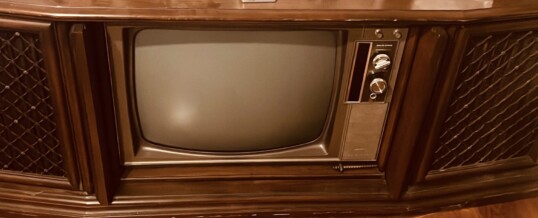
When my parents got our first color television in 1968, it opened up a whole new world for my sister and me. The RCA console TV weighed as much as a Buick and sat in the southwest corner of the red brick house on Beech Street in Ashdown, Arkansas.
The flat-lead wiring went through a small hole in the wall and all the way up to the antenna that was mounted on top of a pole attached to the chimney. It was that connection that brought the rest of the world to us.
And it was commercials that made it all possible.
Most folks never think much about the model developed in America that provided essentially free programming. The networks made the shows, which were paid for by the sponsors.
We complained about television ads in those days, but without them, we likely couldn’t have afforded to watch the things we did.
And Madison Avenue (famously depicted in the show Mad Men) was where the ads we saw were conceptualized, developed on a storyboard, produced, and then aired.
In the early days of television, you’d see the stars doing the ads themselves. The Beverly Hillbillies ate and pitched Kellogg’s Corn Flakes. Andy Griffith and Don Knotts puffed on L&M Cigarettes, and Luci and Desi would pause the show to call for Lucky Strike Cigarettes.
Dinah Shore used song to urge us to see the USA in a Chevrolet, and Robert Young praised Sanka Coffee.
I’ll forgive Mr. Young, because Sanka isn’t coffee and it deserved no praises.
But regardless of the merits of the products, the ads were convincing. Who wouldn’t want to have a smoke with Andy and Barney or cruise in a Bel Air convertible with Dinah?
Even the mundane products seemed exciting.
As a kid, I wanted to eat spicy meatballs just to see how well Alka-Seltzer worked. We didn’t have any pearls to drop into a glass bottle or Prell Shampoo to see how thick it was, but if we had, I would have tried it.
Bucky Beaver convincingly sold Ipana Toothpaste so that every kid would, “Brusha, Brusha, Brusha, with a new Ipana.” Volkswagen helped us to, “Think Small,” and we all knew that, “Things Go Better With Coke.”
Later, we learned that Coke was, “The Real Thing,” because, “They’d like to teach the world to sing.”
Songs were a big part of selling products. Or as they’re called, jingles.
And some famous names were responsible for getting those advertising ditties stuck in our heads.
Catchy tunes for McDonald’s, Dr. Pepper, Kentucky Fried Chicken, and Band-Aid were written by none other than Barry Manilow. The same guy who gave us “Mandy” and “Copacabana” on the radio, wrote the ad jingles that had us singing about KFC and bandages. Manilow co-wrote the Band-Aid commercial with Donald Wood.
I am stuck on Band-Aid brand, ’cause Band-Aid’s stuck on me
‘Cause they hold on tight no matter what on fingers, toes, and knees
I am stuck on Band-Aid brand, ’cause Band-Aid helps heal me
Barry also convinced us that at McDonald’s, “You deserve a break today.” That Colonel Sanders was serious when he said, “If you want Kentucky Fried Chicken, you’ll have to visit me.” And Dr. Pepper is for every boy and girl, and was the most original soft drink ever in the whole wide world.
Today, we have a few good ad campaigns, but not many. The GEICO Insurance ads with the cavemen were good, but they’re gone now. Progressive Insurance ads with Flo are solid, but she’s not in them as much these days.
The most interesting man in the world sold Dos Equis Beer, but they retired him (or the actor retired). Then they brought him back. Funny how when sales drop, they fall back on what worked.
Maybe they should do that with more brands. I don’t mind singing about Dr. Pepper and Band-Aids, or reaching for an Alka-Seltzer after a spicy meatball.
But if I see another emu selling insurance, I may need to join Andy and Barney on the front porch for a cigarette. Then, the three of us will go down to the Piggly Wiggly and squeeze the Charmin.
© 2026 John Moore
John’s, “Puns for Groan People” and two volumes about growing up in the South called, “Write of Passage,” are available at TheCountryWriter.com. John would like to hear from you at John@TheCountryWriter.com.
MAR
2026